CIRCLES
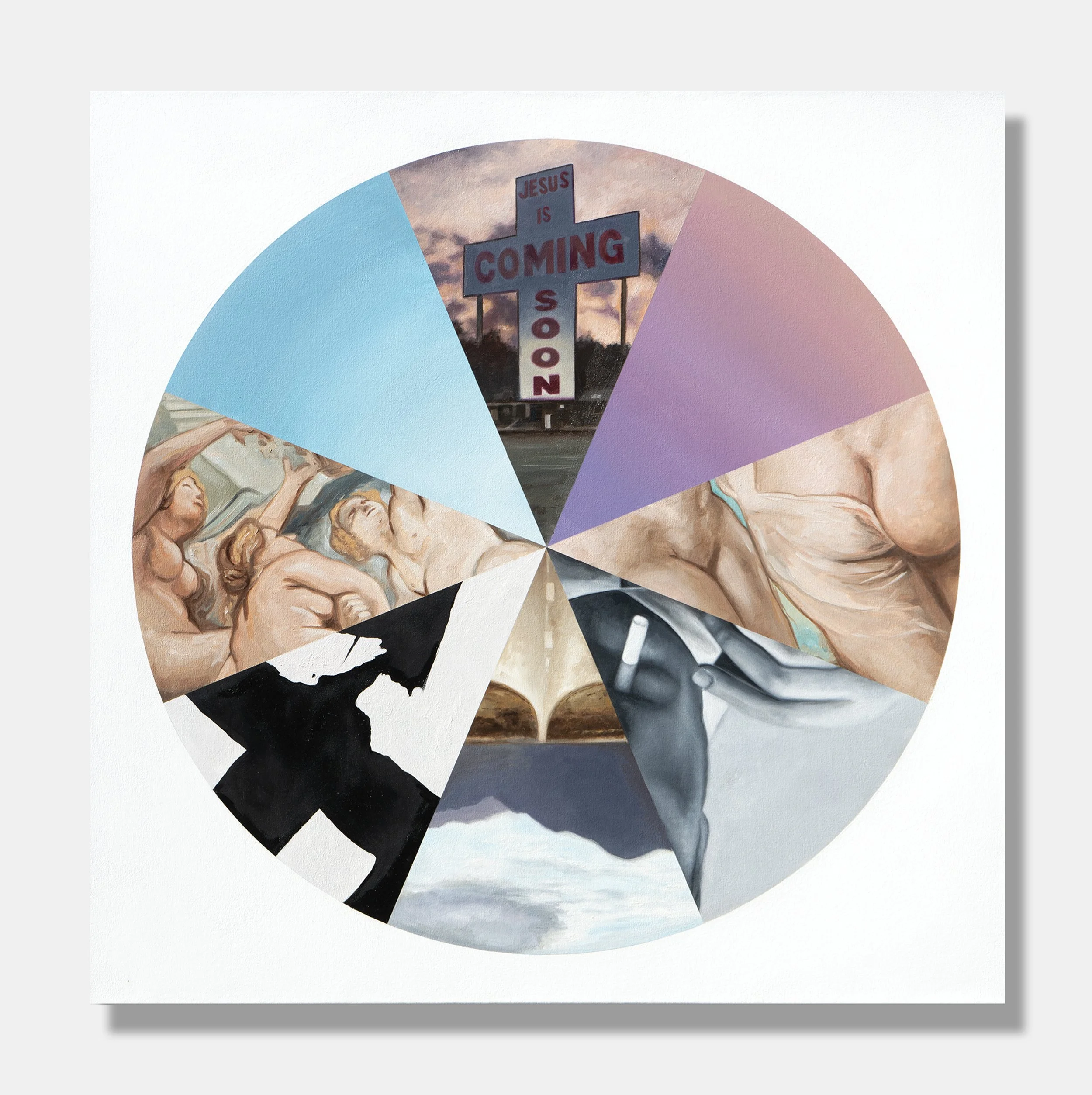
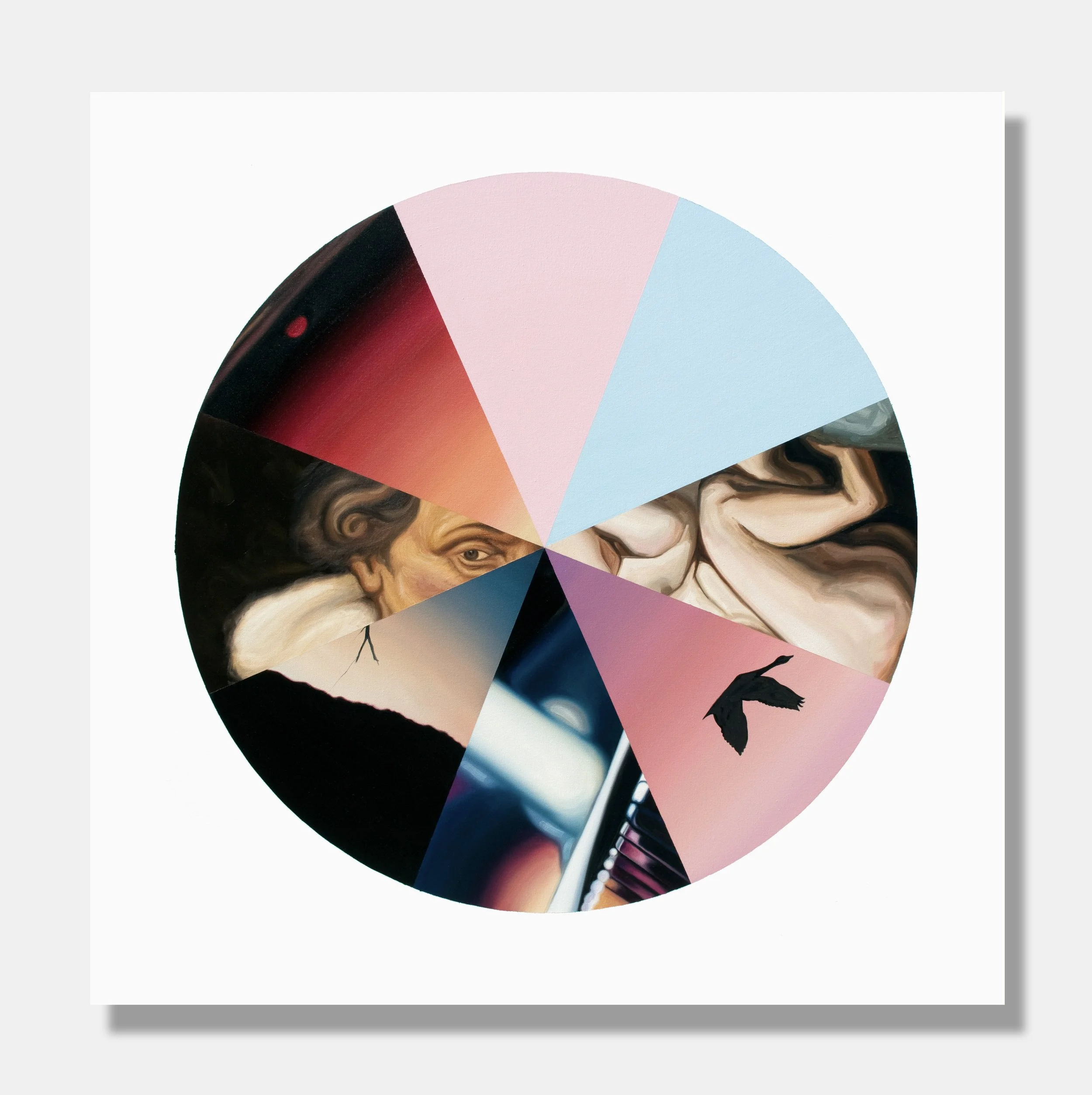
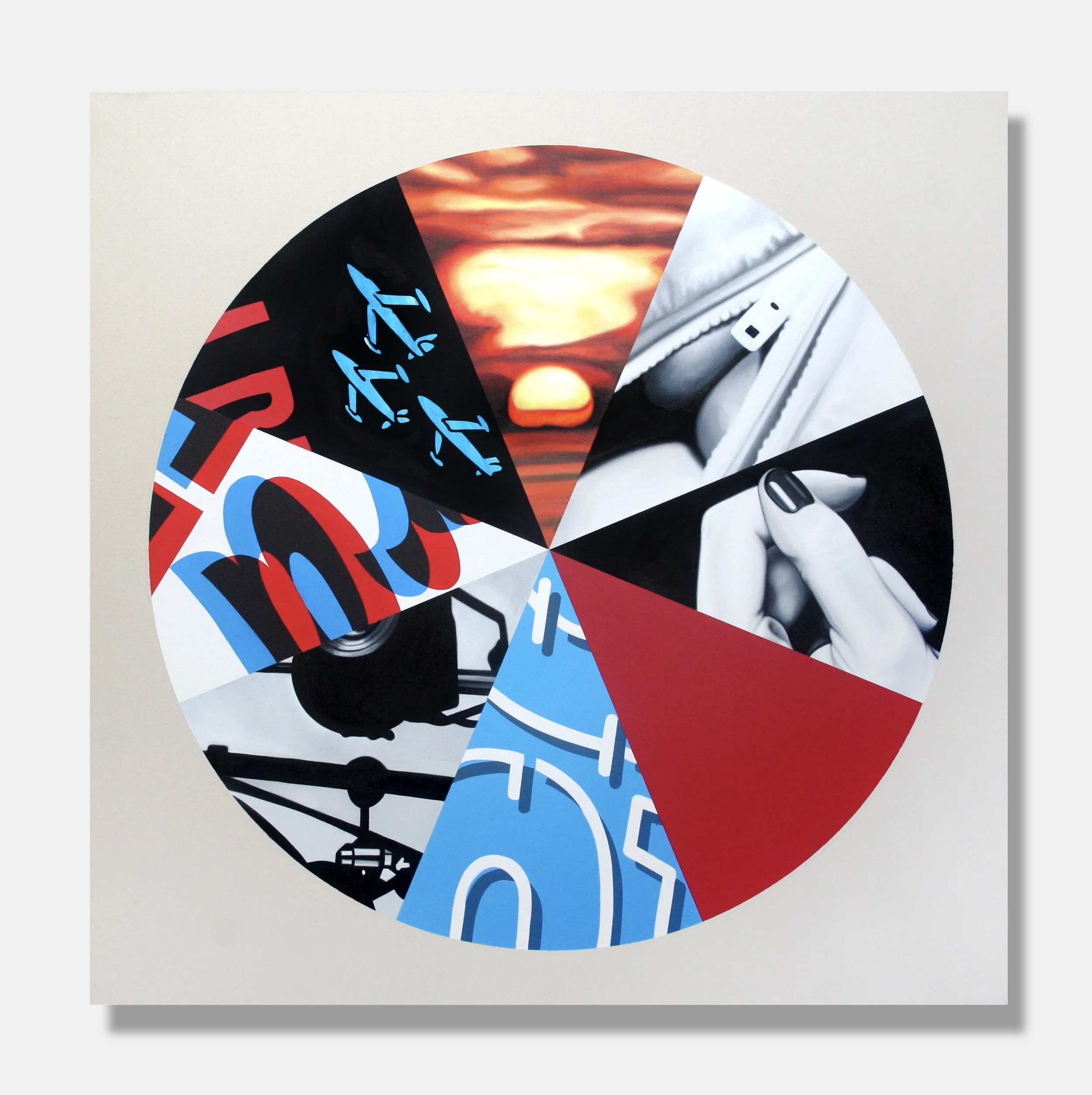
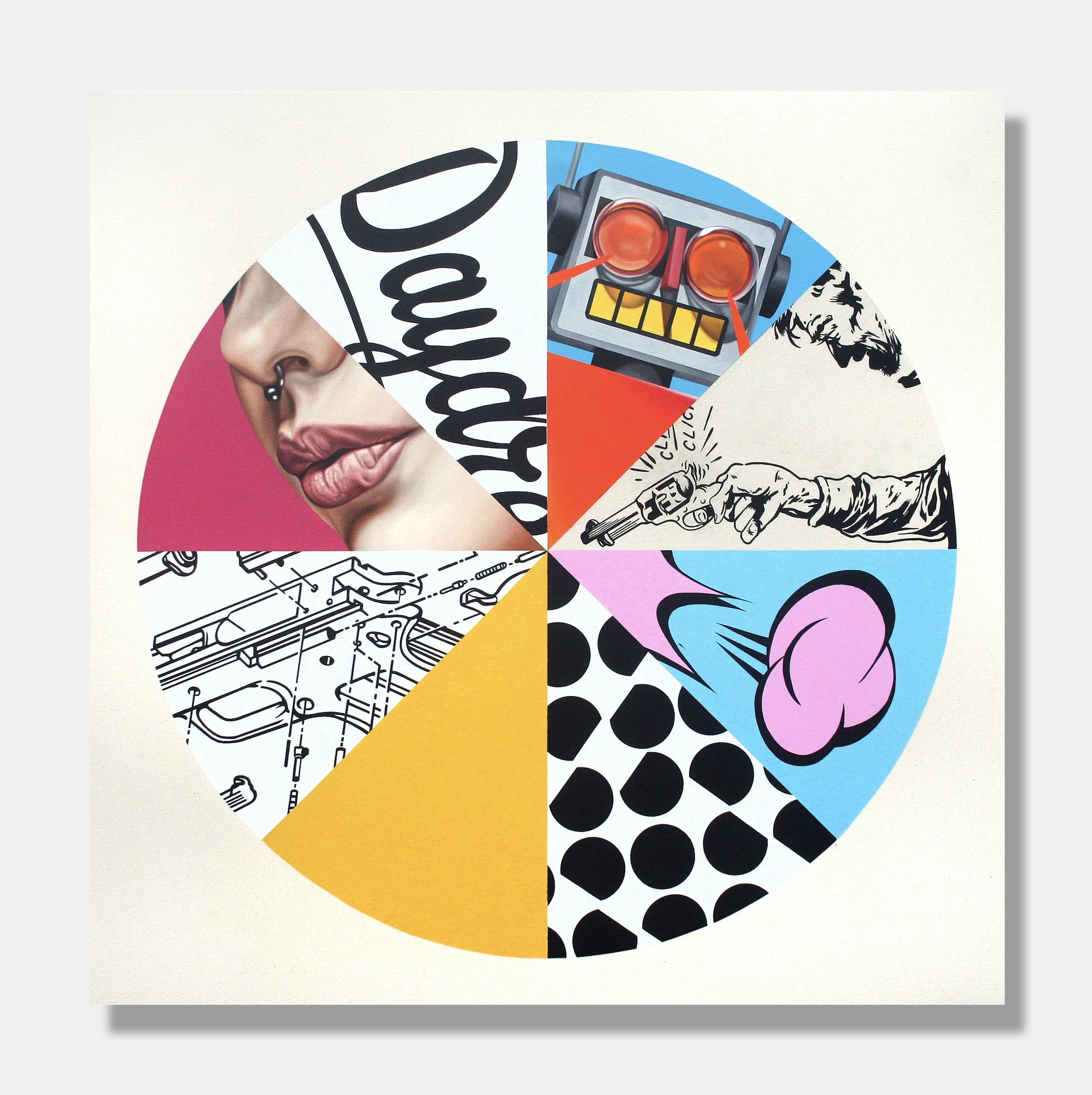
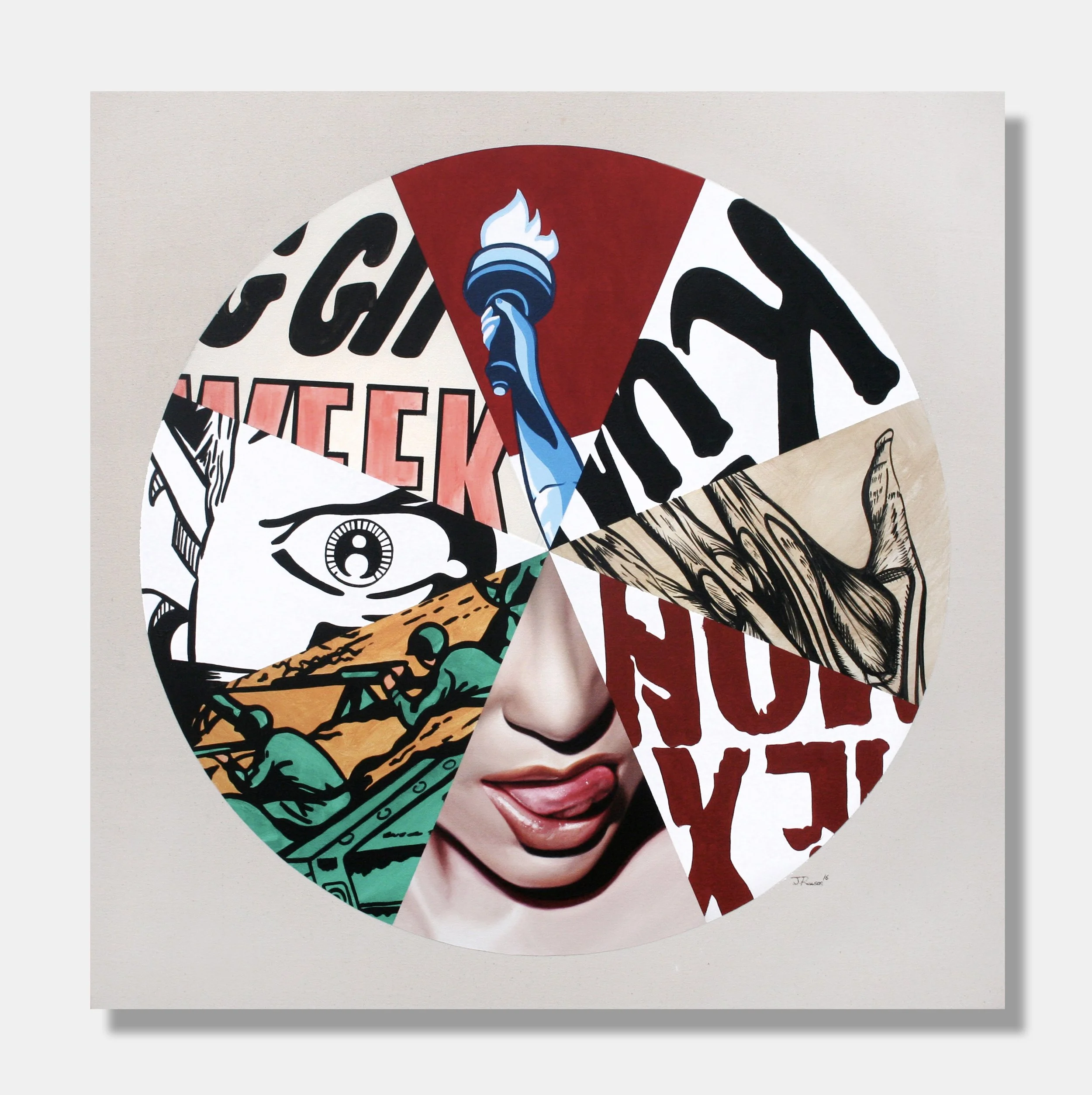
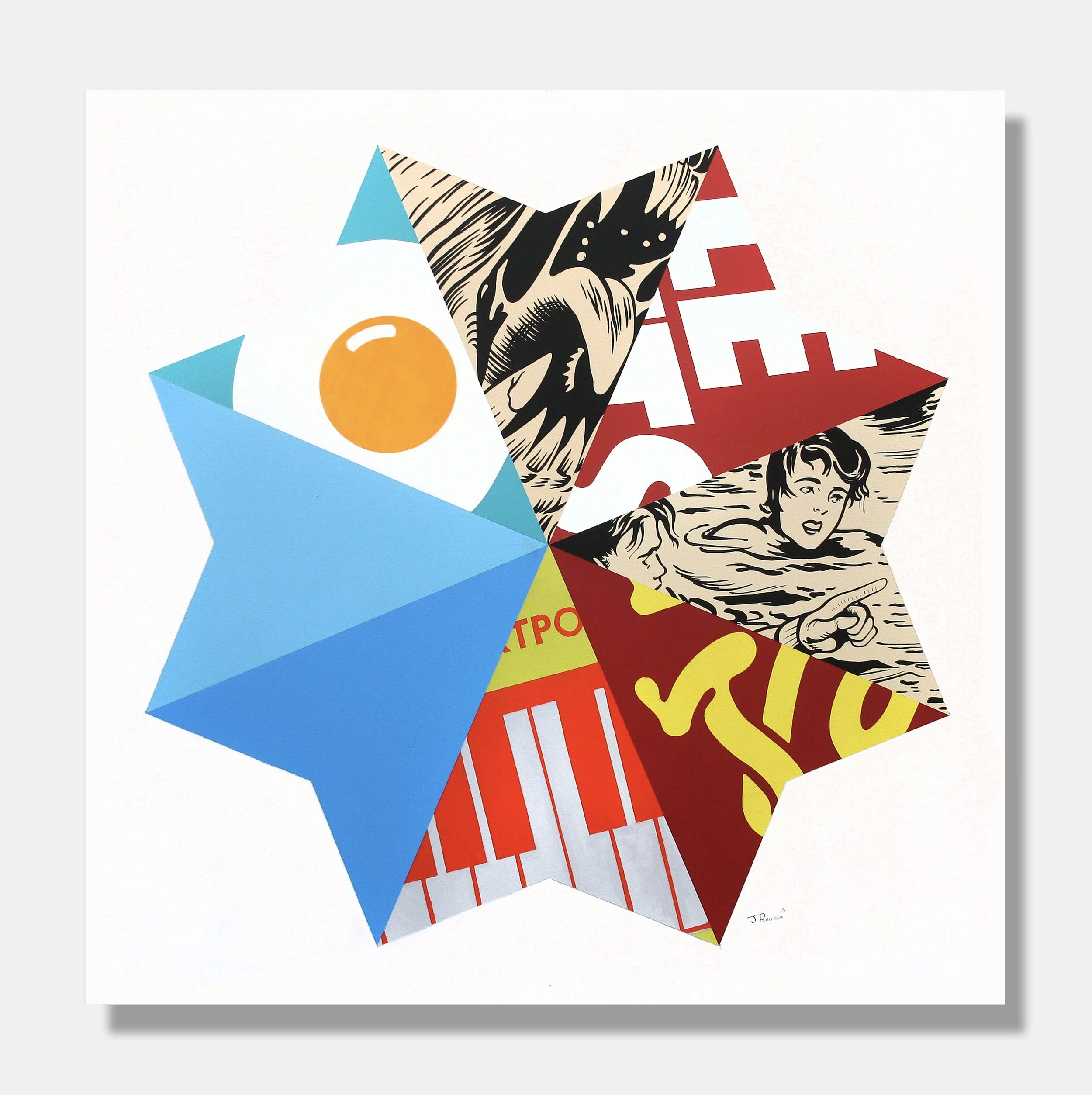
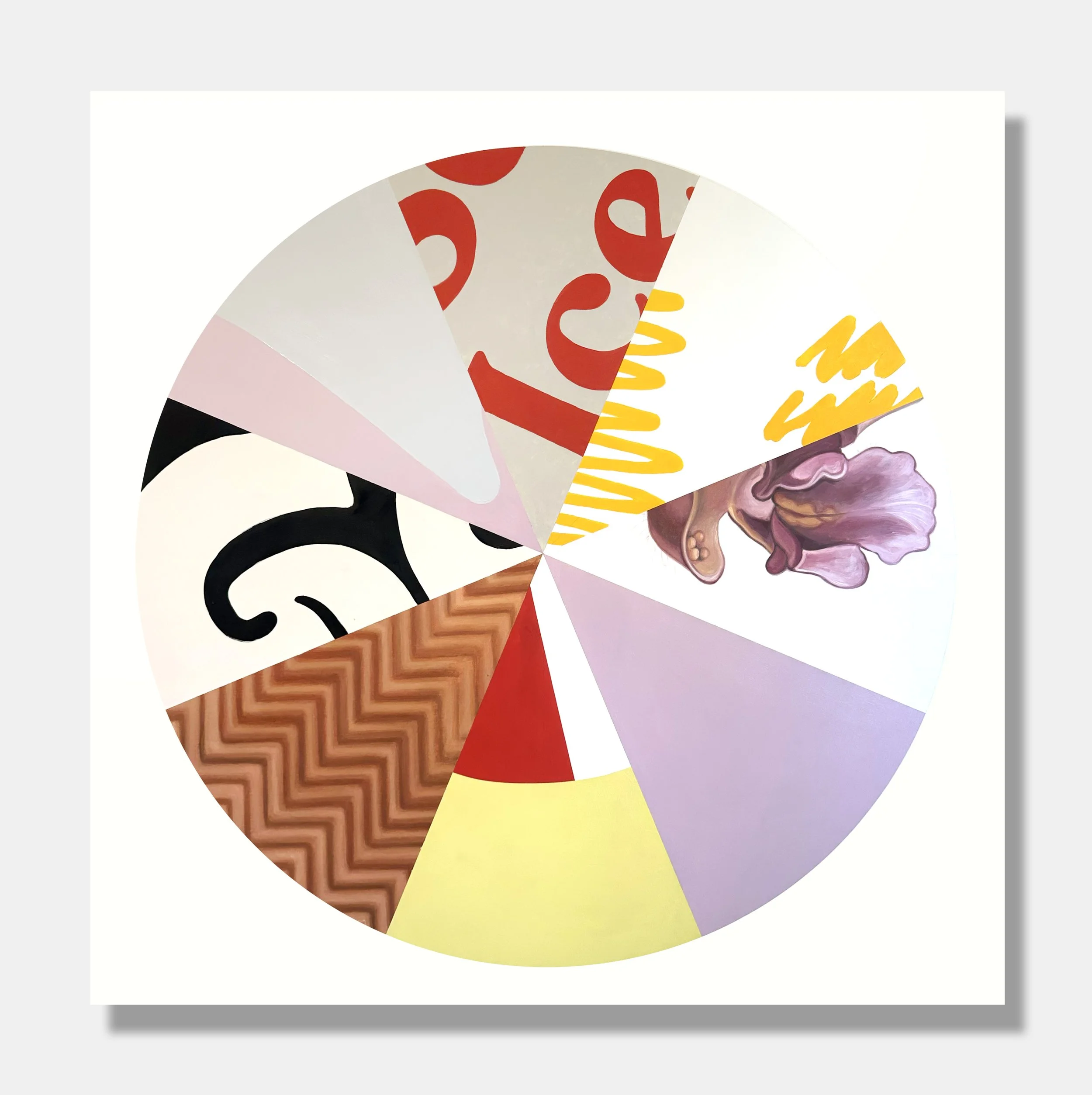
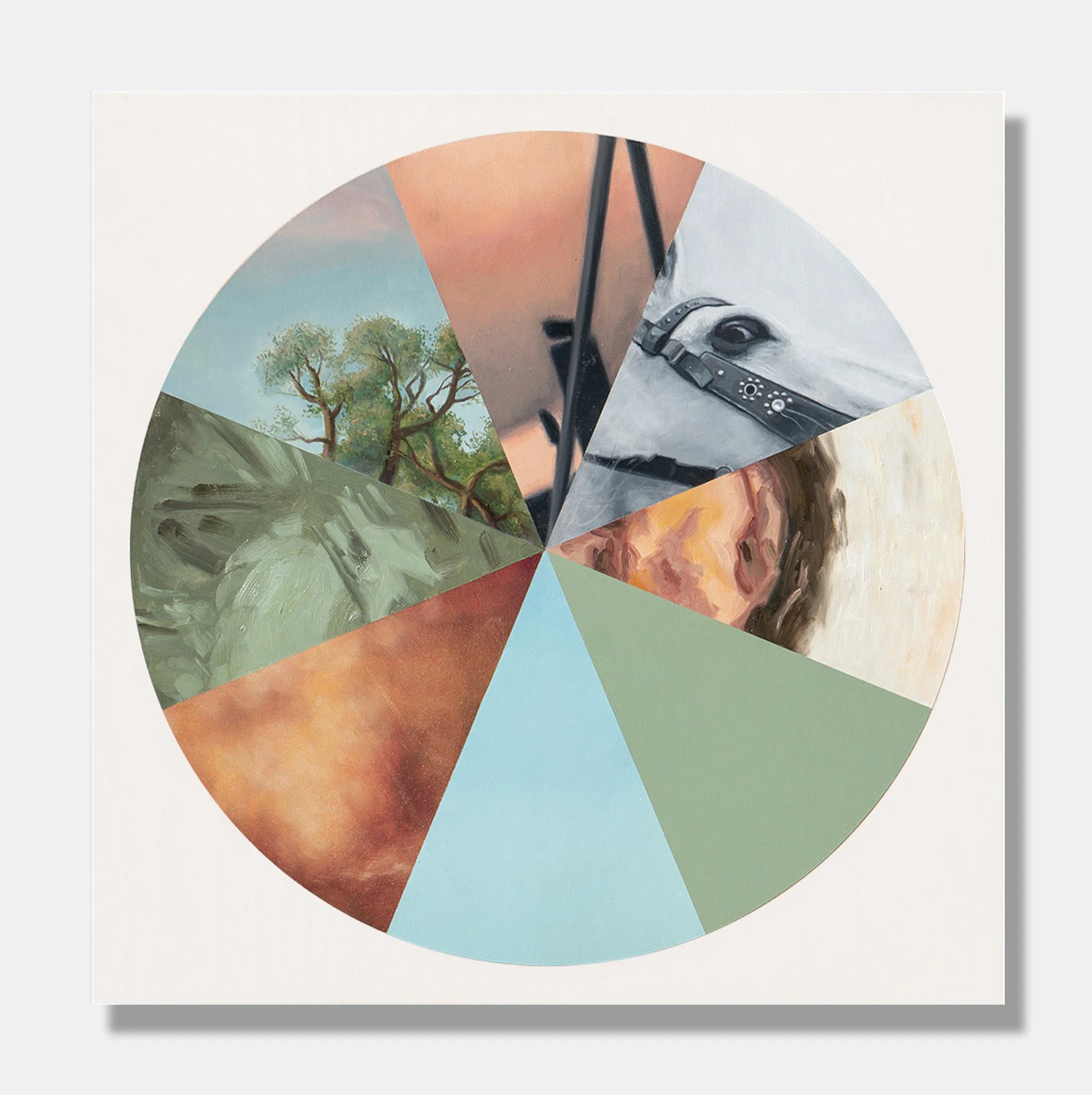
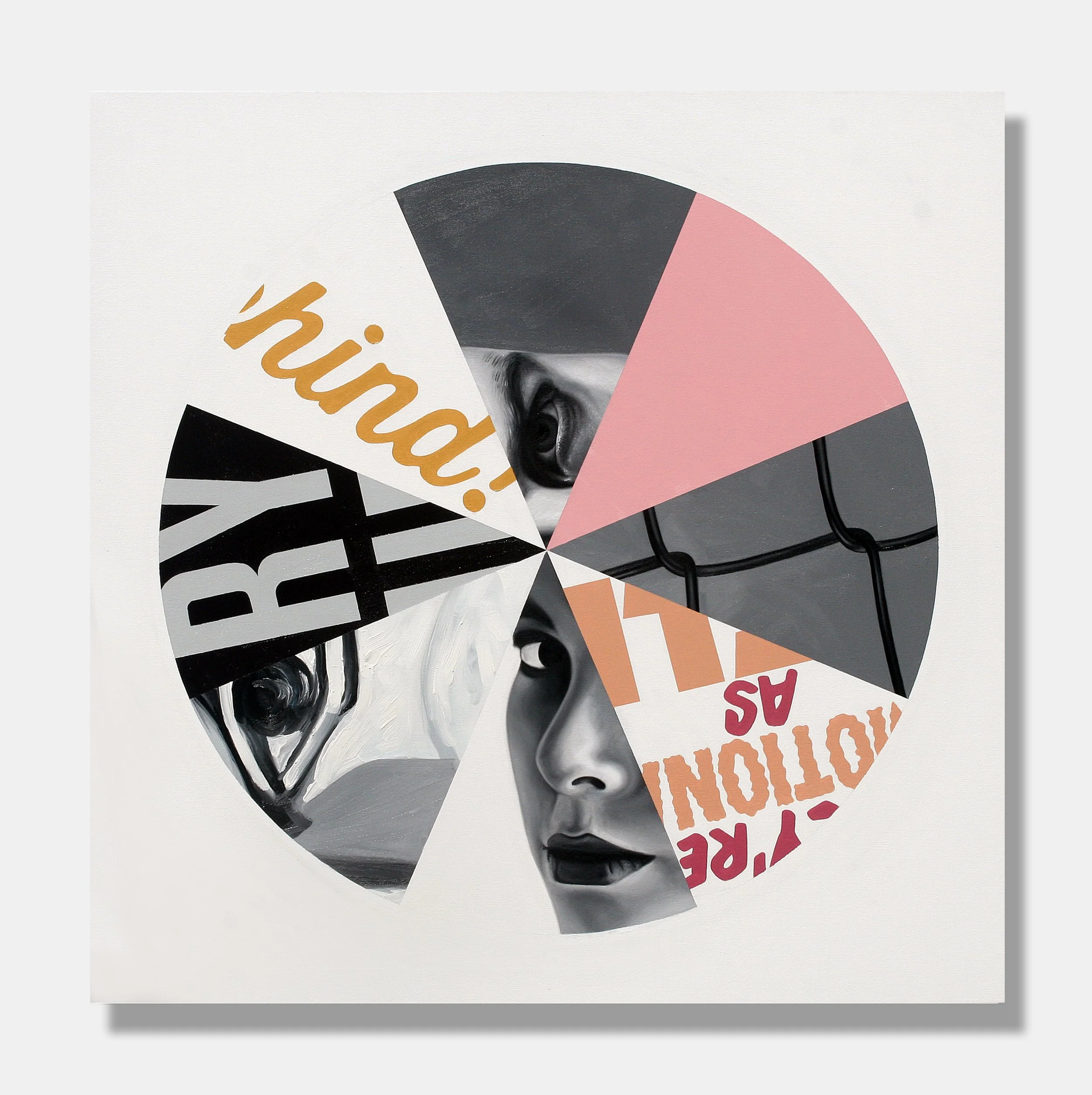
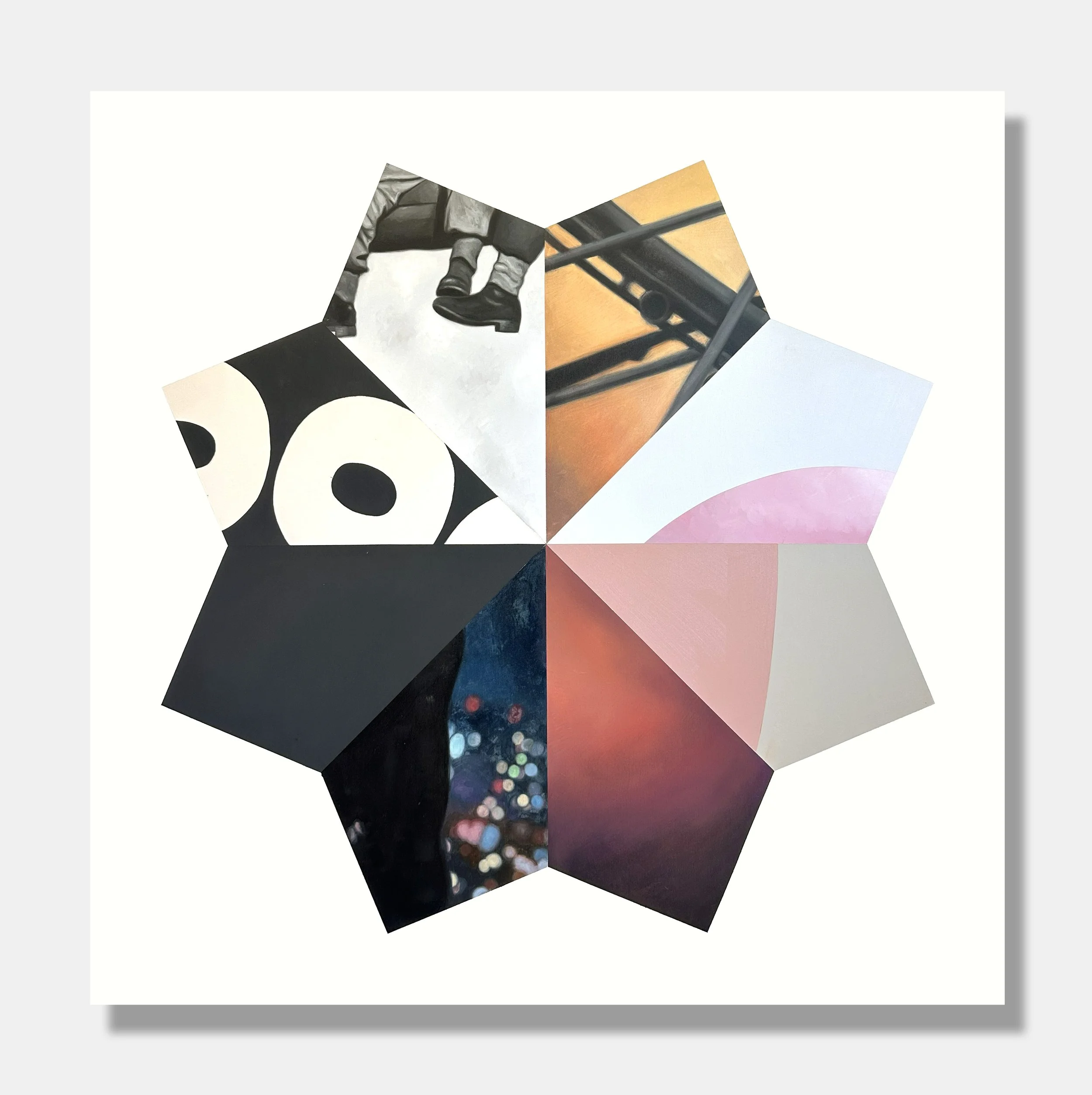
In an age of infinite digital possibility, Rawson turns deliberately to the physical: to paper, scissors, and the printed image. Using a custom-made template, he isolates and extracts imagery from magazines, advertisements, comics, and other printed media — fragmenting each source until form is severed from its original narrative. These fragments are then reassembled into tightly constructed circular, star, and polygonal compositions, where faces, typography, landscape, and symbol become formally equivalent — stripped of hierarchy, held together by colour, weight, and tension alone.
What emerges is simultaneously abstract and familiar. The viewer recognises the language — a Lichtenstein figure, a religious billboard, a Rubik's cube, classical fresco — but finds it dislocated, spinning outward from a central point like a compass of cultural memory. Rawson's works oscillate between the exuberant noise of the pop-saturated pieces and the quieter, more introspective canvases, where muted purples, pinks, and naturalistic forms suggest a world withdrawing from spectacle. In every case, the circular template acts as both formal device and philosophical one: a lens, a wheel, a contained universe in which meaning is not fixed but continuously reassembled.
Executed in oil with a technical mastery that belies the apparent chaos of their source material, these are paintings that reward sustained attention — works that are, as Rawson himself has described, "both abstract and familiar.
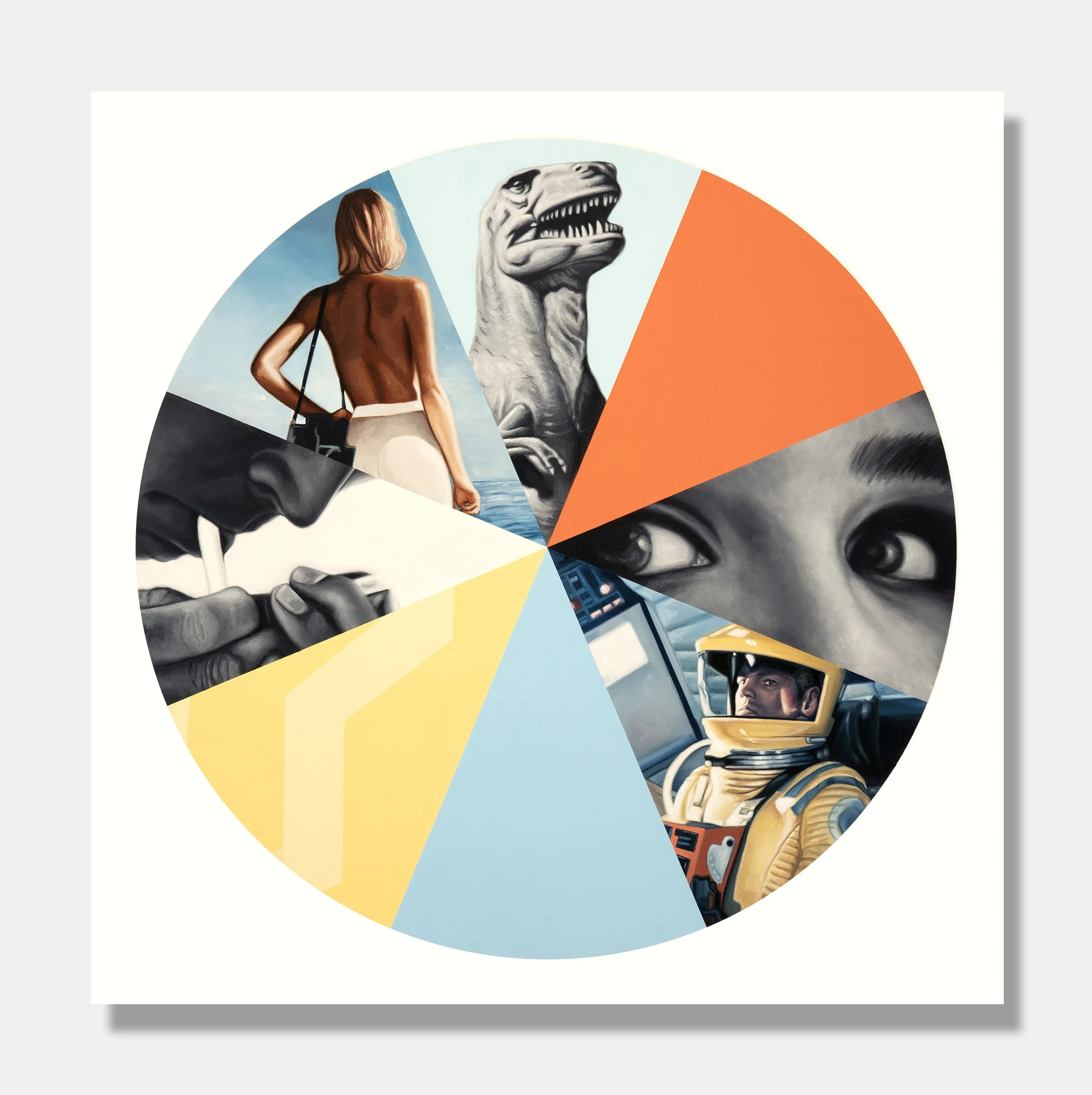
“AIR”
Hitch
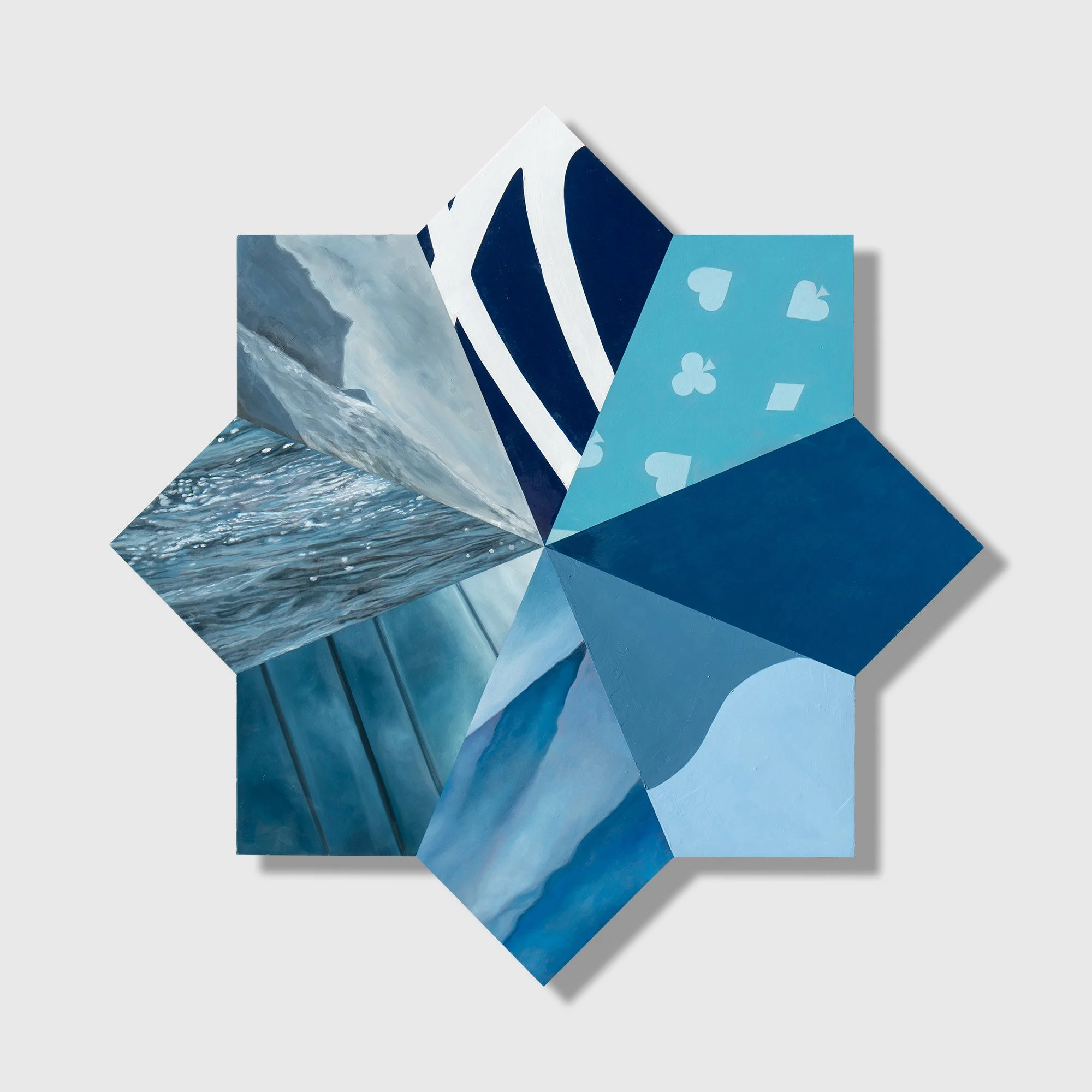
Original
100 × 100 cm
Oil on wooden panel
2026
(shipping calculated at checkout)